
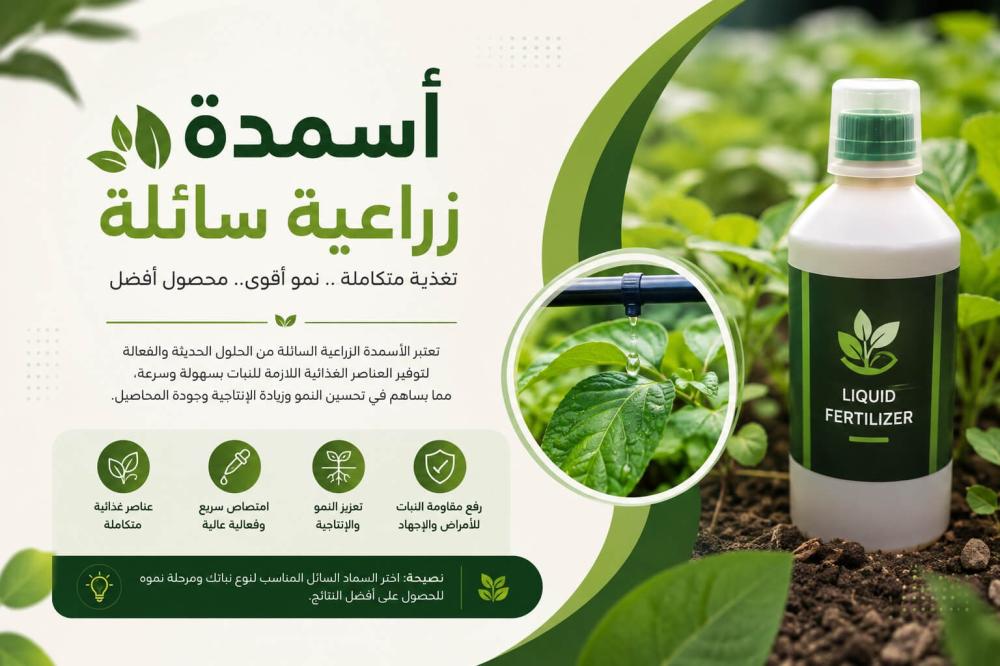
Liquid fertilizers are among the most important modern agricultural technologies that have revolutionized agricultural productivity and crop quality. In this comprehensive guide, we'll explore everything you need to know about liquid fertilizers, from their definition and types to their benefits and applications, culminating in smart purchasing tips to ensure you get the best quality product from Al-Talib Store, your ideal destination for all your agricultural needs.
What are liquid agricultural fertilizers?
Liquid agricultural fertilizers are solutions containing essential plant nutrients in a liquid form, making them easy to use and quickly absorbed. These fertilizers are characterized by their ability to deliver nutrients to plants either through the soil (added to irrigation water) or through the leaves (foliar spraying).
The difference between liquid agricultural fertilizers and solid and granular fertilizers
The fundamental difference between liquid and solid agricultural fertilizers lies in several aspects:
- Absorption speed: Plants absorb nutrients from liquid fertilizers much more quickly compared to solid fertilizers, which need time to decompose.
- Ease of application: Liquid fertilizers can be applied through drip irrigation systems or sprinklers without the need for special tillage equipment.
- Uniform distribution: Liquid fertilizers provide a more uniform distribution of nutrients in the soil or on the leaves.
- Cost and effectiveness: Although the initial cost of liquid fertilizers may seem higher, they are more economical in the long run due to their high effectiveness and reduction of nutrient loss.
Types of liquid agricultural fertilizers
Liquid agricultural fertilizers vary to meet the needs of all crops and agricultural conditions, and some of the most important types are:
liquid organic fertilizers
These fertilizers are made from natural materials such as animal manure, plant residues, and food scraps that have been decomposed and soaked in water. They offer numerous benefits to soil and plants, improving soil fertility and aeration, reducing salinity, and increasing crop yields.
Liquid chemical fertilizers such as NPK
These fertilizers contain key nutrients in specific proportions, particularly nitrogen (N), phosphorus (P), and potassium (K), in addition to micronutrients. A wide variety of these fertilizers are available at Al-Talib Store in multiple formulations suitable for various crops.
Biofertilizers and liquid fertilizers
It contains beneficial microorganisms that fix nitrogen or dissolve phosphates, increasing nutrient availability for plants. This fertilizer is environmentally friendly and promotes agricultural sustainability.
Amino acid and humic acid fertilizers
These fertilizers are powerful biostimulants that promote plant growth and increase their resistance to environmental stress. Al-Talib Store carries many products rich in amino acids, humic acid, and fulvic acid.
Benefits of using liquid fertilizers
Liquid fertilizers are revolutionizing modern agriculture, bringing numerous benefits to farmers, crops, and soil:
Rapid absorption and ease of foliar fertilization
Plants absorb nutrients from liquid fertilizers very quickly, making them ideal for treating nutrient deficiencies in record time, and the possibility of using them via foliar spraying makes them an ideal option for plants with root problems.
Improving soil fertility and aeration
Liquid fertilizers, especially organic ones, contribute to improving soil structure and increasing its ability to retain water and air. This leads to an improved root growth environment and increased activity of beneficial microorganisms in the soil.
Reduce consumption of water and harmful salts
Liquid fertilizers help reduce water consumption as they can be applied with irrigation water in precise quantities, and they also help in treating soil salinity and reducing harmful salts.
Increase crop productivity in less time
Thanks to their rapid absorption and high effectiveness, liquid fertilizers contribute to increased productivity and improved crop quality in a short time. This translates to higher economic returns for farmers within the same growing season.
You may be interested in: Agricultural fertilization methods
How to use liquid agricultural fertilizers according to the type of crop
The method of using liquid agricultural fertilizers and the number of times of application vary according to the type of crop and its nutritional needs:
Open-field vegetables and plastic greenhouses
- For exposed vegetables: It is preferable to use liquid fertilizer 4 to 5 times, starting from the first watering until the flowering stage.
- Vegetables in plastic greenhouses: It is preferable to apply fertilizer 2 to 3 times starting from the first irrigation.
Field crops such as wheat and corn
- Corn and grains: It is recommended to use liquid fertilizer in a quantity of 6 to 8 kg at a time before plowing the soil.
- Sunflowers, cotton and tobacco: It is recommended to use 2 kg per heap starting from the first irrigation until the end of flowering.
Fruit trees and palm trees
Fruit trees and palms respond excellently to liquid fertilization, which can be applied by irrigation or foliar spraying at critical growth stages such as flowering and fruit set.
Houseplants and gardens
- Liquid fertilizer should not be added directly to the soil to avoid burning the roots.
- The fertilizer is added to the irrigation water at a rate of 30 grams per 10 liters of water.
- It is recommended to fertilize houseplants once a month during the spring and summer seasons.
The appropriate dosage and fertilization schedule
Water dilution rate
Proper dilution of liquid fertilizer is crucial for successful fertilization, as the dilution rate varies depending on the type and concentration of fertilizer and the crop. The instructions on the product packaging must be followed precisely.
Number of uses per season
The number of fertilization applications varies depending on the crop type and plant stage. Typically, the fertilization program is divided into several applications throughout the growing season to meet the plant's needs at each stage.
Best time to apply liquid fertilizer
- The best times to apply it are early morning or evening to avoid the intense heat of the sun.
- Liquid fertilizers are best applied during the active growth period of plants.
- Experts recommend starting fertilization 30 days before the beginning of spring.
Precautions during fertilization
- Do not fertilize sick or damaged plants.
- Avoid fertilizing at very high temperatures.
- Make sure the spraying and irrigation equipment is clean before use.
- Keep fertilizers in a cool, dry place away from direct sunlight.
Organic vs. Chemical Liquid Agricultural Fertilizers
Difference in composition and source
Liquid agricultural fertilizers are made from natural materials such as animal manure and decomposed plants, while chemical fertilizers are made from chemically processed mineral materials.
The difference in long-term impact on the soil
Organic fertilizers improve soil structure and fertility in the long term, while excessive use of chemical fertilizers may lead to soil degradation and increased salinity.
The difference in price and economic feasibility
Chemical fertilizers are characterized by high concentrations and a relatively lower price, but organic fertilizers provide environmental and educational benefits that support long-term agricultural sustainability.
Factors affecting liquid agricultural fertilizer prices in the Saudi market
The prices of liquid agricultural fertilizers in Saudi Arabia are affected by several factors, including:
- Fertilizer type, composition, and nutrient concentration
- Brand and manufacturer
- Country of origin and import costs
- Quantity purchased (wholesale or retail)
- Seasonal offers and discounts
Tips for buying high-quality liquid fertilizer at a reasonable price
- Analyze the soil first: Investing in soil analysis saves you money and ensures you buy the right fertilizers.
- Read the label carefully: Make sure you understand the product's ingredients, the proportions of nutrients, and how to use it.
- Look for registered products: Make sure the product is registered with the official agricultural authorities in Saudi Arabia.
- Compare price and quality: Don't just rely on the lowest price, but compare price, quality and effectiveness.
- Buy from trusted sources: Choose trusted stores like Al Talib Store to ensure product quality.
Common mistakes when using liquid fertilizers
- Over-fertilizing: Overusing liquid fertilizers is one of the most common mistakes and can lead to burning of plant roots and soil degradation.
- Ignoring soil type: Soil needs for nutrients vary according to its type and composition, so the appropriate fertilizer should be chosen for the soil type.
- Fertilizing sick plants: Fertilizing sick plants increases their stress and may lead to their death, so plants should be treated first and then fertilized.
- Incorrect dilution with water: Not diluting liquid fertilizer in the correct proportions may lead to burning the plants or their inability to benefit from the nutrients.
How to choose the best liquid fertilizer for your crop
- Each crop has different nutritional needs, so the appropriate liquid fertilizer should be chosen according to the type of plant and its age stage.
- Read the label carefully and make sure of the percentage of nutrients in the product, as the concentrations vary from one product to another.
- Make sure the product is registered and approved by the Ministry of Environment, Water and Agriculture in Saudi Arabia to guarantee its quality and safety.
The best agricultural fertilizer store in Saudi Arabia
Al Talib Store is considered one of the best agricultural fertilizer stores in Saudi Arabia, offering:
- Wide range: Includes all types of liquid fertilizers from the most famous international and local brands.
- High quality: The store is committed to providing high-quality products from reliable sources.
- Competitive prices: Offers regular deals and discounts on all products.
- Agricultural consulting: It includes a team of specialized agricultural engineers to provide consultations and advice.
- Fast delivery: The store covers all regions of the Kingdom with a fast and secure delivery service.
You might be interested in: Agricultural supplies online
Conclusion
Liquid fertilizers are a smart and modern choice for farmers and gardeners looking to increase their productivity and improve the quality of their crops. With their high quality and competitive prices available at Al Talib Store, you can now easily access the best agricultural products and advice. Don't hesitate to visit the Al Talib Store website or contact their expert team to get everything you need for a successful and fruitful growing season.
Frequently asked questions about liquid agricultural fertilizers
1. What is the best liquid fertilizer for agricultural plants?
The best liquid fertilizer depends on the type of plant, its nutritional needs, and its growth stage. At Al Talib Store, you'll find a diverse selection to suit all crops.
2. What is the difference between liquid fertilizer and granular fertilizer?
Liquid fertilizer is quickly absorbed and easy to apply, while granular fertilizer needs time to decompose in the soil.
3. Is liquid fertilizer stronger than solid fertilizer?
Liquid fertilizers are as effective as solid fertilizers and may even be more effective because plants absorb them directly.
4. How many times a month should liquid fertilizer be used?
It varies depending on the type of crop, but it is generally recommended to apply it once or twice a month for houseplants.